Home › Speed Bumps, Curbs, and Asphalt Accessories
Control traffic and improve safety with speed bump installation in Columbus, OH. We install asphalt speed humps, curbs, and parking accessories that slow vehicles and define spaces. Our team helps you choose the right layout to protect pedestrians and buildings.
Precision Asphalt Columbus provides professional speed bump installation throughout Columbus, OH, Ohio and the surrounding area. Our licensed, insured crew delivers safe, clean, on-time work with a free estimate before anything begins. Call (614) 907-4859 or request your free quote.
Speed bump installation and asphalt accessories for Columbus properties
Precision Asphalt Columbus designs and installs speed bumps, curbs, and related asphalt accessories that actually fit how your driveway, parking lot, or private road is used in real life. Instead of dropping generic rubber bumps in random spots, we look at traffic patterns, drainage, and local codes so your traffic calming features slow drivers without causing damage or complaints.
Most of our work in Columbus, OH involves HOAs, churches, medical offices, apartment complexes, and small business parking lots that need drivers to slow down without backing up traffic onto a public street. We walk the site with you, measure approach distances, look at grades, and consider emergency vehicle access before we recommend specific speed bump heights, spacing, and locations.
From permanent asphalt bumps to flexible rubber options, concrete curbs, wheel stops, and custom islands, we tailor every installation to your property, not a one size fits all template.
How professional speed bump installation actually works
A proper speed bump installation is more than throwing some asphalt across a lane. Precision Asphalt Columbus follows a defined process so your new traffic control features are safe, durable, and compliant.
1) Site evaluation and traffic review. We note entry points, sight lines, slopes, and where pedestrians, especially children or seniors, commonly cross. We also measure run‑up distance so speeds are controlled without causing harsh impacts.
2) Layout and marking. Our crew marks exact bump locations, centerlines, and taper lengths with paint. On private lots we align speed bumps perpendicular to travel lanes and avoid placing them in turning areas or at low spots where water collects.
3) Sawcut and surface prep. For asphalt bumps, we sawcut or grind the existing pavement edges where needed to get a strong bond. We clean the surface thoroughly, remove loose material, and apply tack coat so the new asphalt ties into the old surface instead of peeling up.
4) Installation and shaping. We place hot mix asphalt to a controlled height, then hand shape and compact it with vibratory plate compactors and rollers. The height, width, and slope of the approaches are adjusted based on whether the lane serves cars only or includes delivery trucks, school buses, or fire trucks.
5) Striping and signage. After the asphalt cools, we apply high visibility markings and, if needed, install MUTCD compliant warning signs in advance of the bump. This combination is crucial at night and in winter when snow and slush can obscure pavement texture.
6) Final walkthrough and adjustment plan. With you on site, we confirm placement, markings, and sign locations. For properties concerned about tenant reaction, we can phase installations and adjust bump spacing or count between phases.
Material options for speed bumps, curbs, and wheel stops
Different sites in Columbus call for different materials, and choosing correctly affects performance and long term cost.
Asphalt speed bumps are permanent and ideal for private roads and mid‑block crossings in large parking areas. They are built from the same hot mix we use for paving, which means they flex with Ohio freeze‑thaw cycles and can be resurfaced along with the rest of the lot. They are best when you already plan on or have good pavement, and want a clean, integrated look.
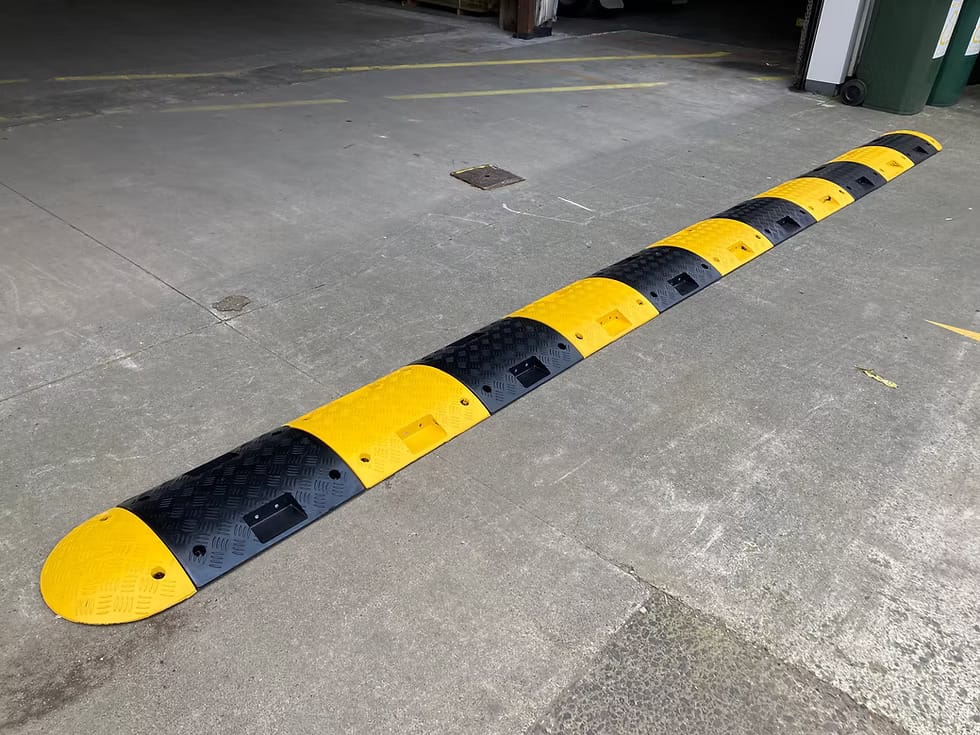
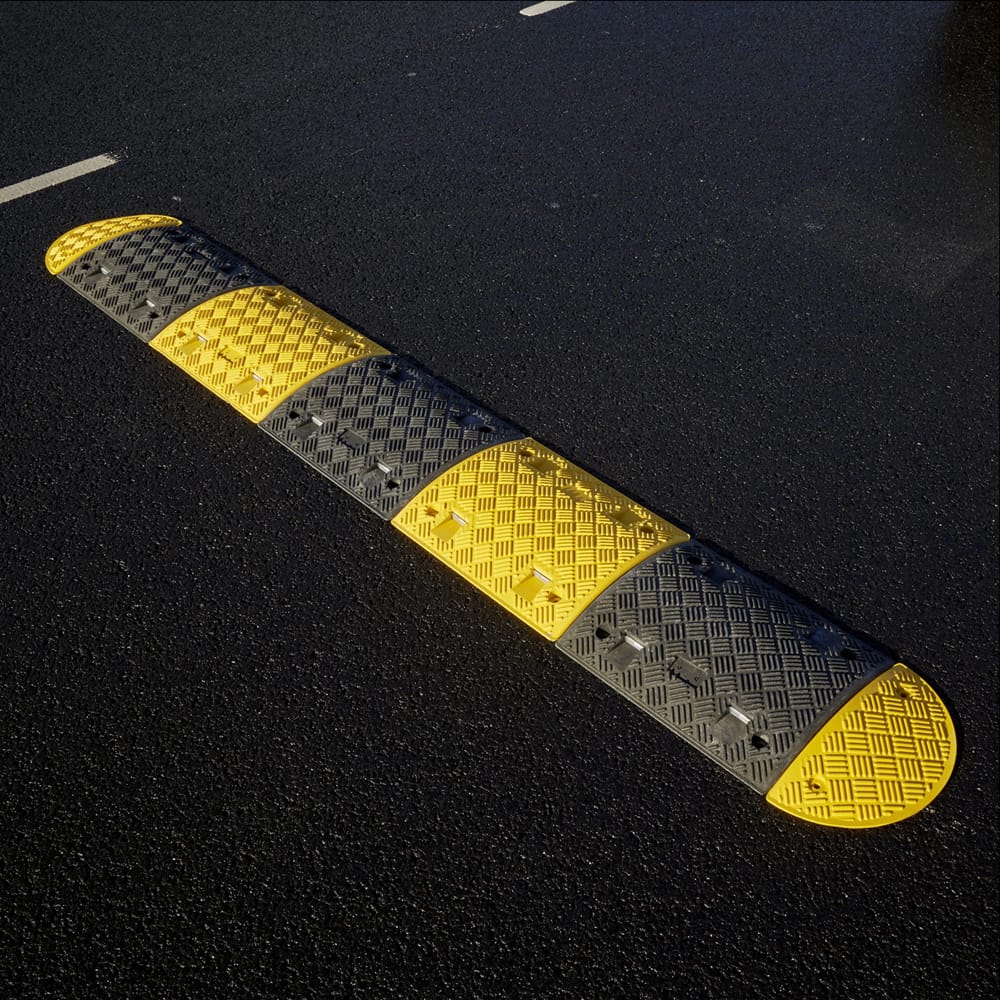
Prefabricated rubber or plastic speed bumps bolt to the existing asphalt or concrete. These are useful when you want a trial installation, have thin or aging pavement, or need to move or remove the bumps seasonally. They provide good visibility with molded striping, but require careful anchoring or they will loosen and shift under braking.
Concrete curbs and islands, whether standard barrier curb or rolled curb, are used to protect landscaping, control vehicle paths, and define parking edges. Concrete handles plow contact better than asphalt and resists oil and chemical drips. We often combine concrete islands with asphalt speed humps to narrow lanes and slow traffic at the same time.
Precast concrete or recycled rubber wheel stops are installed at individual parking stalls to prevent bumper overhang into sidewalks, landscaping, and building walls. We anchor them with rebar or bolts, align them to stall striping, and leave enough offset from sidewalks so doors can open fully without hitting them.
What affects the cost of speed bump and curb projects in Columbus
Customers often ask why pricing for speed bump installation or curb work varies so much. Several real world factors drive project cost in the Columbus area.
Location and quantity. Mobilizing a crew and equipment to install one bump in a small lot costs more per unit than installing ten bumps as part of a larger project. If we can stage multiple curbs, islands, and wheel stops in a single mobilization, your per item cost drops.
Existing pavement condition. Installing bumps on solid, relatively new asphalt usually means simple surface prep. If the lot has alligator cracking, rutting, or severe oxidation, we may need to patch or reinforce the area first or your new bump will fail along with the surrounding pavement. That extra repair work adds expense but prevents early failure.
Material selection and dimensions. Taller or wider traffic calming features use more material and time to shape. Concrete curbs with integral gutters or decorative finishes cost more than plain broom finished barriers. Rubber speed bumps require anchors and hardware, and sometimes small base patches where the pavement is thin or fragile.
Access and staging. Tight courtyards, active retail centers, or hospital drives that must remain open require off hours work, more detailed traffic control, and multiple mobilizations. In contrast, an empty business park lot can often be completed in one continuous operation at a lower rate.
Striping and signage package. Including fresh lane striping, crosswalks, and sign posts in the same scope improves safety, but also increases materials and labor. We itemize these pieces so you can decide what to complete now and what to phase later.
Local codes, HOAs, and permitting considerations in Columbus, OH
In Central Ohio, the rules surrounding speed bumps, curbs, and parking lot accessories depend on who owns the pavement and how it connects to public streets.
On purely private property, such as apartment complexes and commercial center parking lots, you generally do not need a City of Columbus right of way permit for speed bump installation. However, property owners remain liable for design, placement, and maintenance, so following industry standards and best practices is critical.
Homeowners associations in suburbs around Columbus, including areas like Gahanna, Westerville, and Grove City, frequently have internal rules that govern traffic calming. These may address maximum bump height, required warning signs, and notice to residents before installation. Precision Asphalt Columbus often attends HOA board meetings to explain design options, answer questions about emergency vehicle access, and provide sample layouts.
If your project touches the public right of way, such as extending a curb, adding an island near a driveway entrance, or placing signage along a city maintained street, coordination with the City of Columbus or the relevant township or county may be required. In those cases, we help you understand review timelines, basic requirements, and how to align your private lot layout with public approaches.
For schools, churches, and medical facilities, risk management and compliance teams sometimes request specific documentation on slope, layout, and reflective markings. We can provide sketches and product data sheets as needed so you have a clear record supporting your design choices.
Common problems and how Precision Asphalt Columbus prevents them
Poorly designed or installed speed bumps and curbs cause complaints, damage, and higher liability. We are often called to fix or remove work that was done without proper planning. Here are issues we see repeatedly in Columbus and how we avoid them.
Harsh impacts and bottoming out. This usually comes from bumps that are too tall or too abrupt for the vehicle mix. Before we build anything, we ask about delivery trucks, buses, and emergency vehicles, then choose lengths and heights that slow traffic without causing undercarriage damage.
Ponding water around bumps and curbs. If a bump crosses a drainage path without openings or if a curb blocks flow, water pools, freezes in winter, and erodes the pavement. Our crews check drainage patterns and, where necessary, adjust elevations or include scuppers and breaks in curbs to let water move.
Premature cracking or separation. When the interface between new asphalt and existing pavement is not cleaned, tacked, and compacted properly, edges slough off and the bump starts to crumble. We use proper tack coats, cut or grind clean edges, and compact thoroughly so the bump behaves like a single piece with the existing surface.
Visibility issues at night or in snow. Unmarked bumps cause drivers to brake late or swerve. We always recommend bright striping, reflective beads in the paint, and warning signs placed far enough in advance for normal stopping distances. In areas with frequent plowing, we coordinate profile and placement so plow blades can be set to clear without catching.
What to expect when you work with Precision Asphalt Columbus
Our goal is to make your speed bump, curb, and accessory project straightforward, from first visit through final striping.
Initial consultation. We meet on site, learn your safety concerns, look at traffic and drainage, and discuss options like asphalt versus rubber bumps, new concrete curbs, or added wheel stops. We also talk through any HOA rules or corporate policies you must follow.
Written proposal and layout plan. You receive a clear scope that outlines locations, dimensions, materials, and pricing, rather than generic line items. For more complex properties, we can overlay proposed elements on a site plan or aerial photo so you can see exactly what will change.
Scheduling and phasing. To minimize disruption, we often phase work by section, temporarily rerouting traffic and signing off areas as we go. Retail and medical sites typically prefer early morning or weekend work, which we can accommodate with advance planning.
Installation and clean up. Our crews set up cones and signs, complete the asphalt or concrete work, then stripe and install signs or wheel stops after materials have cured or cooled. We remove debris, sweep, and reopen areas as soon as it is safe.
Post project support. If you find that an area needs another bump, or that one location is more aggressive than your drivers can tolerate, we can adjust, extend, or modify installations. Long term, we can also build your traffic control plan into a broader pavement maintenance schedule so sealcoating and striping keep everything performing and looking sharp.